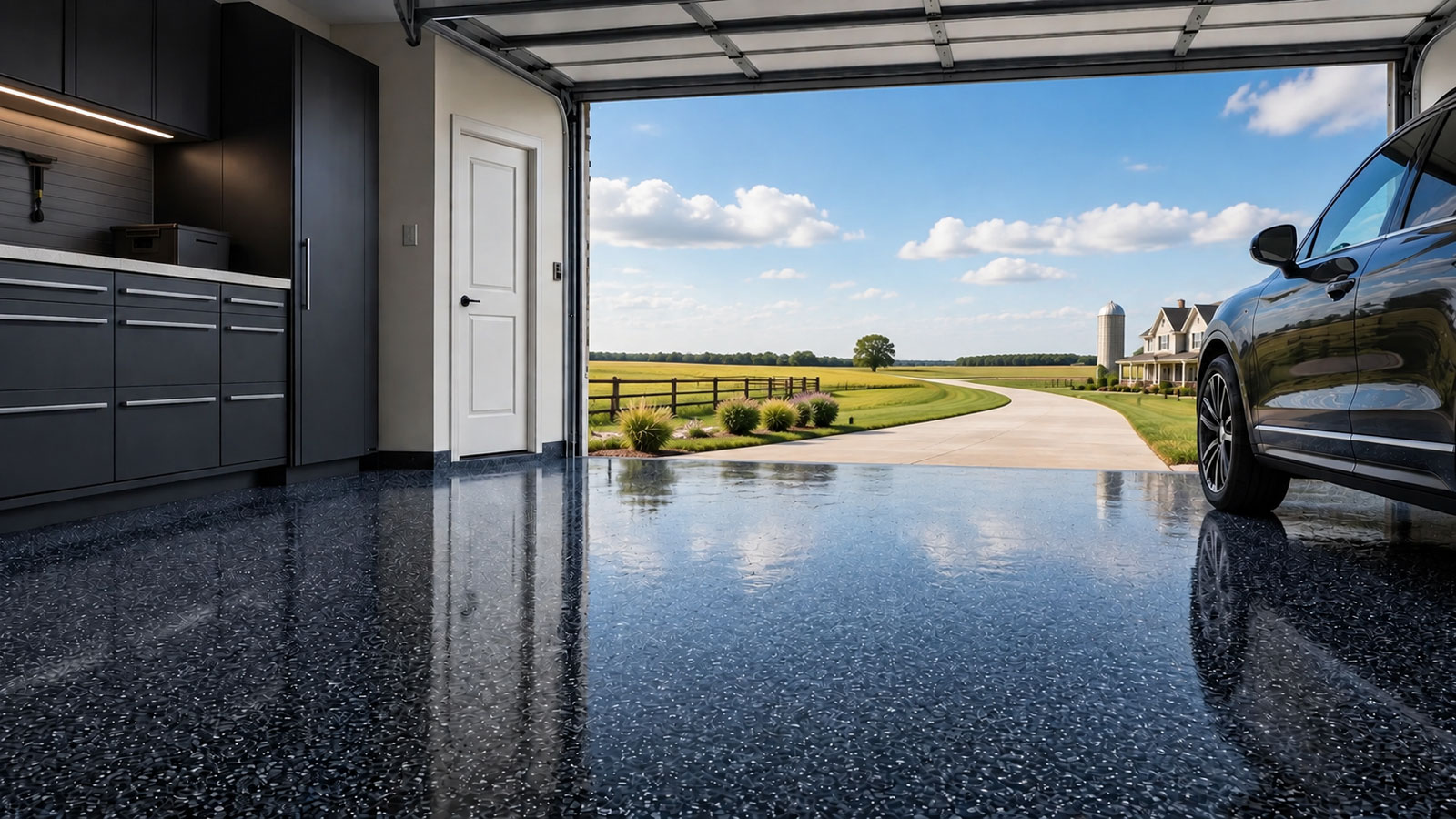
Garage Floor Coating in Sapulpa, OK
Floor Coating Services in Sapulpa, OK
Sapulpa began as a trading post around 1850 near the confluence of Polecat and Rock Creeks, gained railroad service in 1886, incorporated in 1898, and grew rapidly after the 1905 oil boom. That history means an established Sapulpa garage may have been used, altered and recoated across several different eras. Paint, petroleum staining, patch compounds, old sealers and concrete added during expansions can all matter before a new system reaches sound substrate.
The city later became a Route 66 community and developed a strong glass, pottery, and brick-manufacturing economy. That long industrial and transportation history left a wide range of older residential and utility concrete. The city's 11 drainage areas provide a second concrete local factor. They help explain how runoff ultimately reaches Polecat Creek, but the coating decision should still be based on the property: driveway pitch, threshold entry, slow-drying concrete and prior finish failure.
Stormwater is highly local: Sapulpa divides the city into 11 drainage areas that ultimately feed toward Polecat Creek before reaching the Arkansas River. For a garage, old surface history and actual drainage should be evaluated separately.
Local Market Insight
Sapulpa's trading-post, railroad, oil-boom, Route 66, and manufacturing history creates a long surface-use history, while 11 mapped drainage areas give runoff a very specific local structure.
What Affects the Cost of Garage Floor Coating in Sapulpa?
Sapulpa's long railroad, oil, Route 66 and manufacturing history creates older floors with potentially complex surface use, while later residential areas may have younger concrete. Old coatings, petroleum contamination, additions and repairs can affect grinding; drainage across 11 mapped areas, driveway grade and workshop use can add separate scope considerations.
Older industrial and Route 66-era surfaces
Established garages can contain paint, oil staining, patches, sealers, or previous coatings. Older floors should be checked for multiple layers and contamination before deciding how aggressively to grind.
Polecat Creek drainage
Properties in low drainage areas should be checked for actual water entry, dampness, and failed coatings. Use actual water marks and threshold runoff rather than drainage-area labels alone to plan moisture-related work.
Multiple pours and additions
Older homes and shops may have garage expansions, repours, or utility cuts that need localized preparation. Different pours may need separate crack and edge treatment before they are coated as one finished floor.
Workshop contamination
Oil, automotive fluids, and utility use can require additional cleaning and grinding. Petroleum and automotive residues must be removed sufficiently for the coating to bond to sound concrete.
Driveway and lot grade
Runoff can vary across Sapulpa's 11 drainage areas, so the specific property matters. Inspect the driveway and surrounding grade because properties within the same drainage area can behave differently.
Finish and traction
Workshop use, wet-weather grip, decorative flake, and cure timing affect system design. Choose texture and cure timing around real workshop traffic, wet-weather grip and vehicle use.
Call for a clear, project-specific estimate — or request one online.
Local Garage-Floor Conditions in Sapulpa
On an older Sapulpa floor, inspect closely for paint, oil, patching, and different concrete placements that show how the garage changed over time.
If the property lies in a low drainage route toward Polecat Creek, describe actual water behavior during heavy rain before selecting a system.
For workshop or utility spaces, identify chemicals and equipment use because they may matter more than decorative appearance.
Sapulpa's 1905 oil boom and Route 66 years left a long garage-use history
Rail service, the oil boom, Route 66, and manufacturing all shaped Sapulpa across more than a century.
That history means some older garages have seen automotive, shop, or utility use for decades, leaving contamination and multiple surface treatments.
Preparation should remove weak material and contamination rather than simply covering the visible floor.
Sapulpa’s older concrete can therefore have a more complicated use history than the age of the house alone suggests. Railroad, industrial, Route 66, and residential development overlapped for decades, so a garage or shop may have been repurposed, expanded, or repeatedly repaired. Before coating, look for oil staining, old paint, mismatched patches, and different concrete pours that reveal how the space changed over time.
Eleven drainage areas ultimately feed toward Polecat Creek
Sapulpa's stormwater system divides the city into 11 interconnected drainage areas, with runoff ultimately moving toward Polecat Creek before the Arkansas River.
For homeowners, that makes drainage local to the lot. Check driveway slope, low spots, ditches, and any recurring threshold water.
A coating improves the floor surface but does not replace exterior drainage.
Sapulpa’s stormwater system includes many miles of pipes, ditches, and open channels and drains more than 129 stream miles; the city has mapped 11 interconnected drainage areas that ultimately move toward Polecat Creek and the Arkansas River. That scale is useful because it shows runoff is networked, not isolated to creek-front lots. At a garage, downspouts, street drainage, culverts, and driveway pitch should all be considered before deciding whether water is a coating issue or an exterior drainage issue.
Sapulpa’s master drainage work goes even deeper than the 11 broad mapped areas: detailed studies have broken the city into numerous individual basins grouped into major systems such as Downtown, Rock Creek, South Polecat, East Polecat, and North Polecat. That is useful homeowner context because a drainage problem can be very local. A street or culvert issue several blocks away may matter more to one garage than broad proximity to the Arkansas River.
Before coating a Sapulpa garage
- Is the floor bare, painted, sealed, or previously coated?
- Are oil or chemical stains present?
- Do multiple pours or patches show additions?
- Which way does the driveway and lot drain?
- Has water ever entered the garage?
- Is the space used for workshop or automotive work?
- How much traction is appropriate?
Sapulpa Garage Floor Coating FAQs
Can an older Route 66-era garage be coated?
Yes, if the concrete is sound and old coatings, repairs, and contamination are properly addressed. On older Sapulpa properties, long-term paint, oil and repair history should be identified before estimating grinding and removal.
Does Polecat Creek drainage mean every slab is wet?
No. The actual property and concrete must be evaluated; drainage geography alone does not diagnose slab moisture. Sapulpa's 11 drainage areas help frame runoff, but the individual driveway and slab still determine whether moisture work is needed.
Can oil-soaked concrete cause adhesion problems?
Yes. Contamination can prevent bonding, so the installer should evaluate whether cleaning and grinding can produce a reliable surface. Automotive or industrial use can leave contamination below the visible surface, so sound concrete must be reached before coating.
Can different concrete pours be coated together?
Often, yes, after repairs and profiling, but transitions and joints should be assessed individually. Transitions between additions or repours should be inspected for movement and preparation differences before one finish spans them.
Why is Sapulpa's industrial and Route 66 history relevant to garage-floor preparation?
It makes long-term surface use plausible on older properties, but the actual slab is what matters. Inspect for paint, oil staining, patches, old sealers and multiple pours; remove weak or contaminated material before a new coating is installed.
Sapulpa Neighborhoods & Local Context
Phone Quote Line
Speak with a floor coating specialist about your project and get a realistic estimate range.
(918) 727-8827Typical Project Cost
$3,000–$5,500
Typical range for a two-car garage. Final pricing depends on floor size, concrete condition, prep work, coating type, and finish options.
Helpful Guides
Other Service Areas