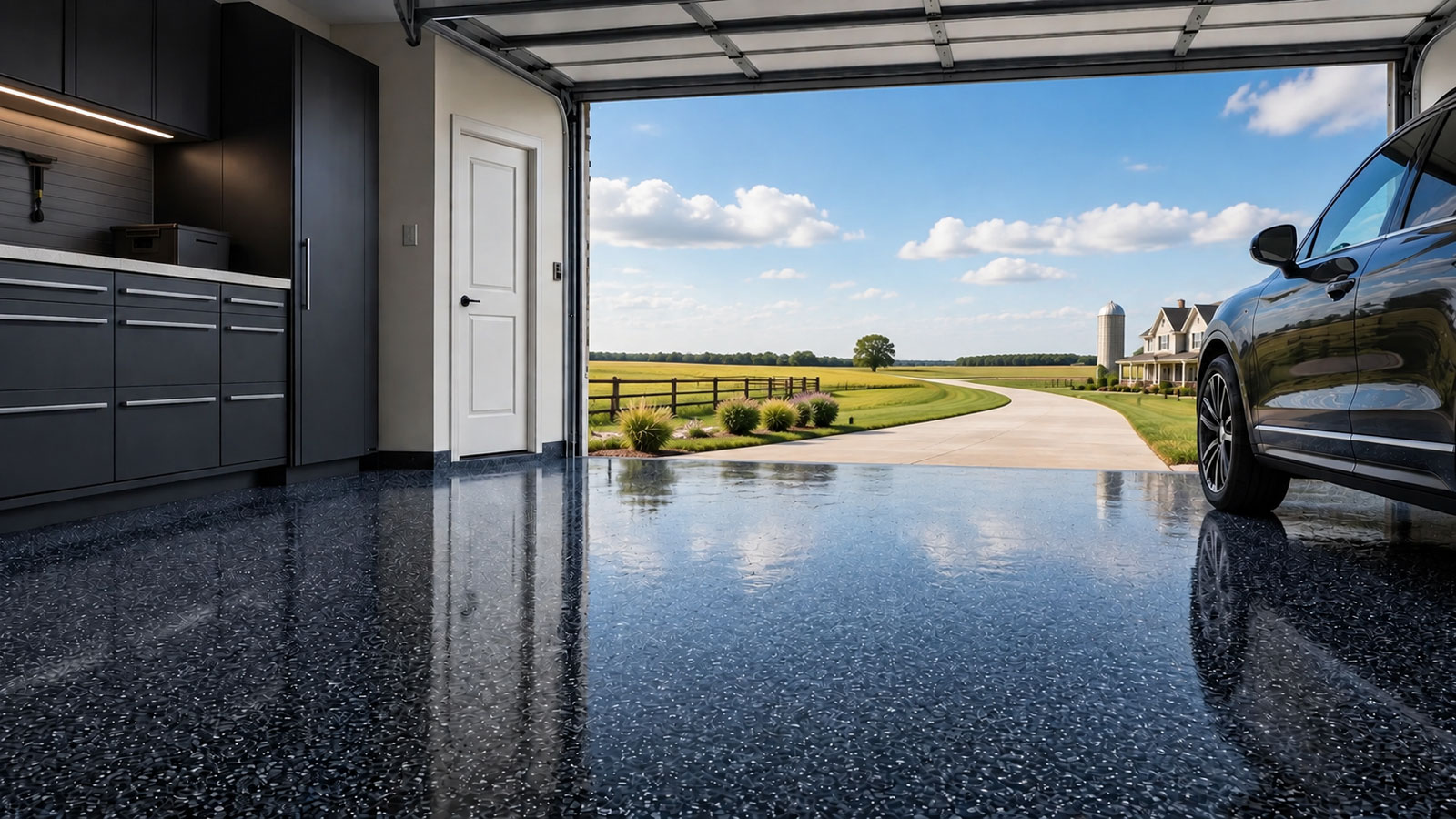
Garage Floor Coating in Broken Arrow, OK
Floor Coating Services in Broken Arrow, OK
Broken Arrow was platted in 1902 around the railroad and remained a small community for decades; its population was only around 2,000 in 1940 before postwar metropolitan growth accelerated. The result is not simply 'older versus newer.' An established central property may have a garage built or repoured later, while a recent subdivision slab may still require aggressive mechanical profiling because of sealers, curing products or a dense machine finish.
By 1970, the city had grown past 11,000, and later decades brought extensive suburban development across a much larger footprint. That means garage floors range from older in-town concrete to newer subdivision slabs. Broken Arrow's creek network adds a second project variable. Little Haikey and Haikey Creek provide real drainage context, but the useful question is what happens at the individual lot: whether driveway runoff reaches the door, whether concrete stays damp and whether an earlier coating failed.
Stormwater also varies across the city, including the Little Haikey and Haikey Creek systems. A good coating estimate separates slab age, surface treatment, crack repair, and actual drainage at the property.
Local Market Insight
Broken Arrow's 1902 railroad-town core and decades of suburban expansion create several generations of garage concrete, while Haikey-area drainage makes water exposure property-specific.
What Affects the Cost of Garage Floor Coating in Broken Arrow?
Broken Arrow's long growth history creates different preparation needs across the city. Older central garages can have paint, patches, additions or oil contamination; newer subdivision floors can have builder-applied treatments and control joints. Haikey-area drainage, driveway grade, larger garage layouts and sun exposure at the doorway can add separate scope considerations.
Older central slab history
Established floors may have paint, oil staining, previous coatings, patches, or additions. Identify old coatings and later additions before deciding how much grinding and repair the floor requires.
Newer subdivision concrete
Young slabs still need mechanical profiling and removal of sealers or curing compounds. New concrete still needs a verified surface profile and removal of incompatible builder treatments.
Haikey-area drainage
Properties near creek systems or low areas should be checked for actual water entry and recurring dampness. Check the driveway and threshold after rain instead of assuming creek proximity means slab moisture.
Cracks and builder repairs
Control joints, shrinkage cracks, and patching should be evaluated before coating. Ask which cracks or joints will be repaired, filled or left to move as designed.
Larger suburban garages
Three-car bays, storage extensions, steps, and cabinets add labor beyond simple square footage. Steps, cabinets and extra bays add edge work beyond simple square footage.
Finish and sunlight
Door orientation, UV exposure, decorative flake, and traction affect system design. Direct sun and wet-weather use can influence topcoat and traction choices.
Call for a clear, project-specific estimate — or request one online.
Local Garage-Floor Conditions in Broken Arrow
In older Broken Arrow, inspect for layers of paint, sealer, repairs, and mixed concrete.
In newer subdivisions, identify builder-applied surface treatments even when the floor looks clean.
Where a property drains toward Little Haikey, Haikey Creek, or another low area, report actual runoff at the driveway and threshold.
Broken Arrow's garage stock reflects more than a century of growth
The town began around railroad development in 1902 and remained small for decades before rapid postwar suburban growth.
That creates a real preparation split between older central garages and later subdivision floors.
Both can coat well when the preparation matches the actual concrete.
Broken Arrow’s current drainage investment also shows that newer development does not eliminate water questions. The city’s 2026 bond program includes roughly $6 million in stormwater improvements, with projects ranging from downtown drainage and detention ponds to Haikey Creek tributary study work. For a garage estimate, that reinforces a practical rule: inspect lot grade and threshold behavior on both old and new properties instead of treating drainage as only an older-neighborhood problem.
The preparation difference is not merely cosmetic. A central Broken Arrow floor that has been painted and patched several times may require more removal labor than a much larger newer garage; a newer slab may have almost no wear yet still fail if an invisible sealer remains. That is why quotes should describe the removal and profiling process, not simply promise the same coating system for every neighborhood.
Creek drainage should be checked at the property, not assumed citywide
Broken Arrow manages stormwater across several drainage systems, including Little Haikey and Haikey Creek.
For homeowners, the useful check is the driveway, apron, and slab after heavy rain. Water marks, recurring dampness, or coating failure are project evidence.
If the floor stays dry, creek proximity may have little bearing on coating selection.
Broken Arrow manages multiple drainage basins, including Haikey, Adams, Broken Arrow, Elm, Aspen, and smaller creek systems. That variety means two homes only a few miles apart can send stormwater in very different directions. The homeowner should look for where roof and driveway runoff travels, whether the apron ponds after storms, and whether dampness is limited to wet-vehicle use or persists independently. Those observations are more useful than choosing a coating based on the creek name alone.
Before coating a Broken Arrow garage
- Is the floor older central concrete or newer subdivision concrete?
- Is paint, sealer, or an old coating present?
- Are cracks, joints, or builder patches visible?
- Does the driveway send water toward the garage?
- Is the property near a creek or low drainage area?
- How much direct sun reaches the door line?
- How is the garage used?
Broken Arrow Garage Floor Coating FAQs
Does an older Broken Arrow home mean the slab is too old?
No. Sound older concrete can coat very well when weak coatings, contamination, and repairs are properly addressed. In central Broken Arrow, later additions and earlier coatings can matter more than the original construction date.
Do newer slabs still need grinding?
Yes. Mechanical preparation creates the profile needed for adhesion and removes incompatible surface treatments. Newer Broken Arrow concrete may still contain curing compounds or smooth finishes that require mechanical removal.
Does creek proximity require a special system?
Not automatically. The actual slab and water history should determine the recommendation. Around Haikey-area drainage, check actual threshold runoff and dampness rather than selecting a system from creek proximity alone.
What increases cost most?
Surface preparation, old coating removal, repairs, larger layouts, edge work, and finish choices usually matter more than the city address. Multi-bay layouts and edge details can add meaningful labor even when open floor square footage looks straightforward.
How can an older central Broken Arrow garage differ from a newer subdivision floor?
An established garage may need old paint, patches or mixed concrete removed and repaired, while a newer slab may mainly need curing products, sealers and smooth finishes mechanically opened. Both require inspection, but the preparation tasks can be quite different.
Broken Arrow Neighborhoods & Local Context
Phone Quote Line
Speak with a floor coating specialist about your project and get a realistic estimate range.
(918) 727-8827Typical Project Cost
$3,000–$5,500
Typical range for a two-car garage. Final pricing depends on floor size, concrete condition, prep work, coating type, and finish options.
Helpful Guides
Other Service Areas