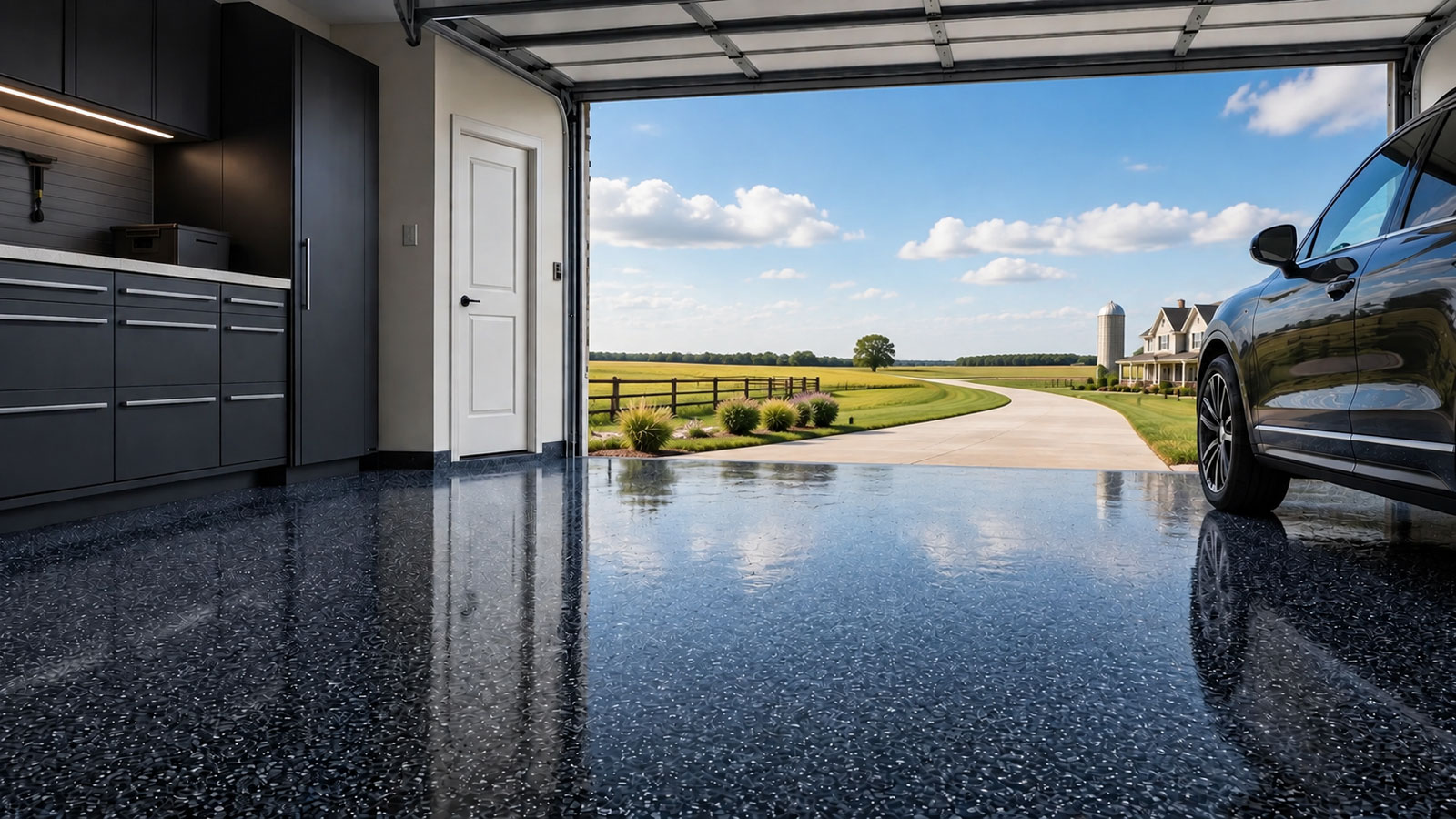
Garage Floor Coating in Glenpool, OK
Floor Coating Services in Glenpool, OK
Glenpool's identity comes from one of Oklahoma's most important oil discoveries. The Glenn Pool field was struck in 1905 and helped propel nearby Tulsa's oil economy, giving Glenpool its long-used claim as the town that made Tulsa famous. That growth means many garages are relatively young, but older shops and utility buildings remain part of the local mix. Floors connected to long-term mechanical or workshop use can have oil staining, chemical residue, patches and several generations of repairs.
The modern city is much more suburban. Population grew from only 770 in 1970 to more than 10,800 in 2010 and continued rising rapidly afterward. In newer subdivisions, the challenge is often the opposite: clean-looking concrete can still carry curing products, sealers or dense finishes that must be removed. Driveway grading and expanding hard surfaces around new development also make actual stormwater flow at the garage worth checking.
That creates a strong old-utility/new-subdivision contrast in garage floors. Established properties and shops may carry oil staining or repair history, while newer homes may have young slabs with sealers, curing compounds, and subdivision drainage questions.
Local Market Insight
Glenpool's 1905 oil-field origin and rapid late-20th/21st-century residential growth create unusually different garage-use and slab-history patterns within one small city.
What Affects the Cost of Garage Floor Coating in Glenpool?
Glenpool's old oil-field identity and rapid suburban growth create two distinct preparation profiles. Older utility floors can require oil, chemical residue, patches and previous coatings to be removed; newer garage slabs may need builder treatments mechanically stripped. Workshop use, driveway drainage, multi-bay layouts and fast vehicle or equipment return can all change labor and system choice.
Oil and utility contamination
Older garages or shops can have petroleum staining or chemical residue that requires deeper cleaning and grinding. Deep petroleum contamination may require more than ordinary cleaning before the coating system can bond.
Newer subdivision slabs
Rapid growth created many young floors with sealers, curing compounds, or builder patching. New concrete still needs a verified surface profile and removal of sealers or curing products.
Cracks and repairs
Older utility slabs and newer control joints can both need localized repair. Inspect repairs and joints individually rather than assuming old and new cracks need the same treatment.
Subdivision drainage
Fast development changes impervious surface and runoff; inspect driveway grade and threshold water. Follow the actual driveway and downspout path after rain to identify recurring threshold water.
Workshop use
Tools, equipment, chemicals, and heavier loads can change topcoat and traction priorities. Working shops may need more traction or chemical resistance than a parking-only family garage.
Garage size and cure timing
Multi-bay layouts and the need to return vehicles or equipment quickly affect scope. Include extra bays and required equipment return in cure-time and staging plans.
Call for a clear, project-specific estimate — or request one online.
Local Garage-Floor Conditions in Glenpool
On an older Glenpool garage or shop, inspect carefully for oil saturation, old coatings, and repair compounds before planning the finish.
On newer floors, identify sealers, curing compounds, and construction residue even when the concrete looks clean.
Check how stormwater moves across newer lots and driveways. Rapid growth can make grading and runoff more relevant than the age of the slab.
Glenpool's oil-field origin can still show up in older utility floors
The Glenn Pool discovery of 1905 transformed the area and tied local development closely to petroleum and industry.
An older garage, shop, or utility building may therefore have a different contamination history from a purely residential slab.
Oil-soaked or chemically contaminated concrete may require more aggressive preparation before coating.
The oil-field connection is relevant only when the concrete itself shows that kind of use. A residential garage should not be presumed contaminated because Glenpool began with petroleum development, but an older shop or utility slab with dark staining, solvent residue, or repeated vehicle work deserves a more careful contamination assessment. Deep oil penetration can require more cleaning and grinding, and in severe cases the installer may need to explain why a normal coating specification is not appropriate.
Rapid growth changed Glenpool from small town to suburb
Glenpool grew from 770 residents in 1970 to more than 10,800 by 2010, with strong growth continuing afterward.
That expansion added large areas of newer housing and younger garage slabs.
For those floors, the preparation question is often sealers, curing compounds, control joints, and builder residue rather than decades of wear.
That growth also means many Glenpool homeowners are dealing with modern subdivision conditions rather than old industrial floors. Newer slabs can have smooth machine finishes, curing compounds, builder patching, and control joints that are easy to overlook because the concrete appears clean. At the same time, new roofs and driveways increase impervious surface, so grading and threshold runoff should be checked separately from the slab’s age.
A modern Glenpool estimate should therefore separate contamination risk from construction-era risk. An older utility floor may need oil or chemical residue evaluated before normal grinding begins; a newer family garage may instead need careful removal of a sealer or curing treatment. Treating both floors as simply “concrete” can hide the most important preparation step and produce misleading price comparisons.
Before coating a Glenpool garage
- Is the garage residential, workshop, or mixed use?
- Are oil or chemical stains present?
- Is the slab painted, sealed, or previously coated?
- Are cracks, joints, or patches visible?
- Does the driveway slope toward the garage?
- Is the floor newer construction with unknown curing products?
- How quickly must equipment or vehicles return?
Glenpool Garage Floor Coating FAQs
Can oil-stained Glenpool concrete be coated?
Sometimes, but contamination must be evaluated and removed sufficiently for the system to bond. Deeply saturated areas may require additional treatment. On older Glenpool utility floors, oil depth and previous repairs should be identified before the coating system is priced.
Do newer Glenpool slabs need mechanical prep?
Yes. New concrete still needs a suitable surface profile and removal of incompatible treatments. Newer Glenpool subdivisions can still have curing products or sealers even when the slab looks nearly perfect.
Can a shop use more traction than a family garage?
Yes. Texture and topcoat can be adjusted for workshop use, though excessive texture may make cleaning harder. A working shop may justify different traction, chemical resistance and cleanup priorities than an attached family garage.
Does rapid growth affect garage drainage?
It can. New roofs, streets, and driveways change runoff, so the individual lot and threshold should be inspected. Rapid growth makes lot grading worth checking, especially when downspouts or a sloped driveway send water toward the door.
Why does Glenpool's oil-field history matter to some older garage or shop floors?
It does not mean every property is contaminated, but older utility spaces may have experienced petroleum or mechanical use. Oil staining and chemical residue should be evaluated and removed to sound concrete before a coating is installed.
Glenpool Neighborhoods & Local Context
Phone Quote Line
Speak with a floor coating specialist about your project and get a realistic estimate range.
(918) 727-8827Typical Project Cost
$3,000–$5,500
Typical range for a two-car garage. Final pricing depends on floor size, concrete condition, prep work, coating type, and finish options.
Helpful Guides
Other Service Areas